How to Count Calories Without Weighing Your Food (3 Methods That Work)
You don't need a food scale to track your diet. Here's how to count calories without weighing food — using your hands, everyday containers, or an AI that estimates portions from a photo.
Can you count calories without weighing food? Yes — here's how
You can count calories without weighing food by using reference objects you already have: your hands, your usual plates and cups, or your phone's camera. Each method converts what you see into a reasonable portion estimate, and for most goals — losing a moderate amount of weight, maintaining, or building muscle — that's plenty accurate.
A food scale is the gold standard, but it's also one of the biggest reasons people quit tracking. Weighing every ingredient turns dinner into a chemistry lab. The three methods below trade a little precision for a lot of consistency, and consistency is what actually moves the needle.
Method 1: The hand-portion method
Your hand is a built-in measuring tool: it's always with you, it's roughly proportional to your body size, and it never needs batteries. Sports nutrition coaches have used hand-based portions for years precisely because they work anywhere — at home, at a buffet, or when you're tracking calories at a restaurant.
The basic system looks like this:
| Hand measure | Roughly equals | Best for | Ballpark calories |
|---|---|---|---|
| Palm (no fingers) | ~100–120 g cooked meat or fish | Protein | ~120–180 kcal (lean) |
| Fist | ~1 cup | Vegetables | ~25–50 kcal |
| Cupped hand | ~½ cup cooked | Carbs (rice, pasta, oats) | ~100–130 kcal |
| Thumb | ~1 tablespoon | Fats (oil, butter, nut butter) | ~90–120 kcal |
To use it, build each meal from these units: one to two palms of protein, one to two fists of vegetables, one to two cupped hands of carbs, one to two thumbs of fat. Log the equivalent amounts in your tracking app. After a week or two you'll estimate these on sight without thinking.
Method 2: The container method
If hand portions feel too abstract, let your kitchenware do the measuring. The trick is to standardize: eat from the same bowl, use the same serving spoon, and learn what one "unit" of your regular foods contains.
- Cups and spoons. One measuring cup of cooked rice is around 200 kcal; a tablespoon of olive oil is around 120. Measure once, memorize, then just count scoops.
- The plate template. Fill half your plate with vegetables, a quarter with protein, a quarter with carbs. On a standard dinner plate that keeps most mixed meals in a predictable calorie range.
- Self-portioned foods. Eggs, bread slices, tortillas, yogurt pots and cheese slices come pre-measured — count pieces instead of grams.
- Label servings. Packaged foods list calories per serving; map one serving to a container you actually use ("one serving of granola = half my coffee mug").
The container method shines with repetitive meals. It gets shakier with homemade stews and casseroles where ingredients hide inside each other — for those, see our guide to counting calories in homemade food.
Method 3: Let AI estimate portions from a photo
The lowest-effort way to count calories without weighing food is to not estimate at all — point your camera at the plate and let an AI do it. Modern photo-scanning apps recognize the foods on your plate and estimate portion sizes from visual cues like plate coverage, food height and typical serving norms, then return calories and macros in seconds.
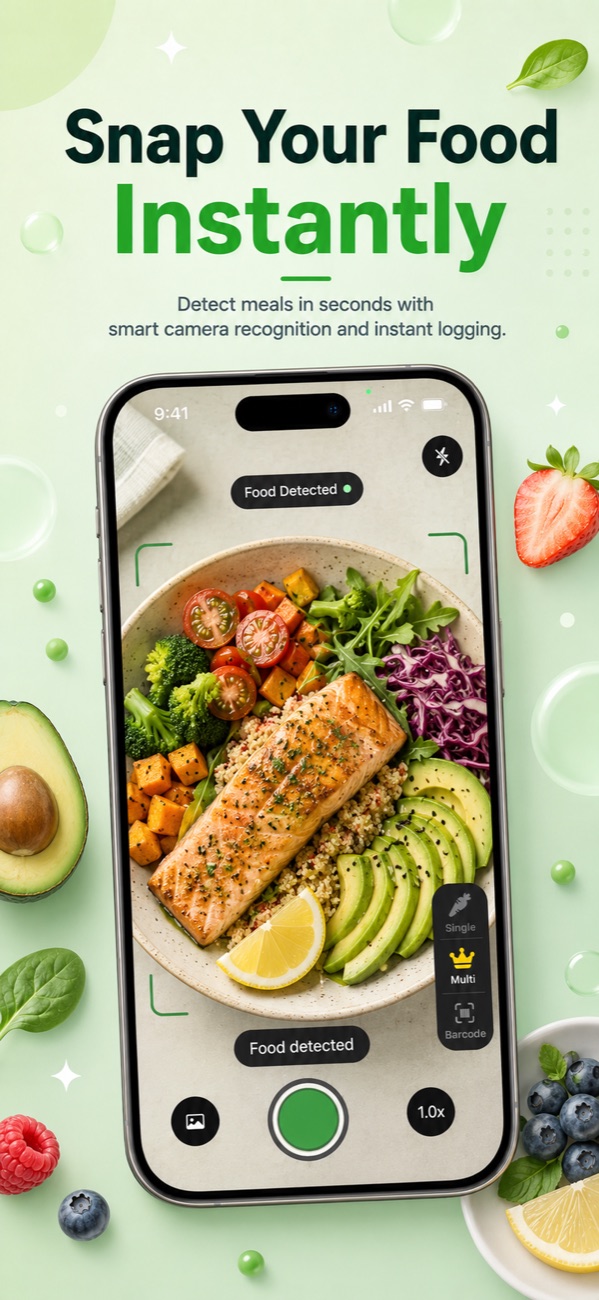
This turns a two-minute logging chore into a five-second one, which matters more than it sounds: the easier logging is, the more days you actually do it. If you want a deeper look at how photo logging works end to end, we've covered it in how calorie counting from a picture works.
How Foodify estimates portions for you (and lets you nudge them)
Foodify's AI photo scan detects multiple foods on a single plate and estimates a portion for each one — the chicken, the rice and the salad get separate line items, not one vague "mixed meal" guess. Every result is editable before you save it, so if the app calls your rice 150 g and you know it's closer to 250 g, you simply correct the portion before saving and log the right amount.
For packaged foods there's a barcode scanner, so anything with a label needs no estimating at all. And if you'd rather not estimate dinner in the first place, Foodify Pro's personalized meal plans hand you meals with calories already calculated per meal — following the plan is the portion control.
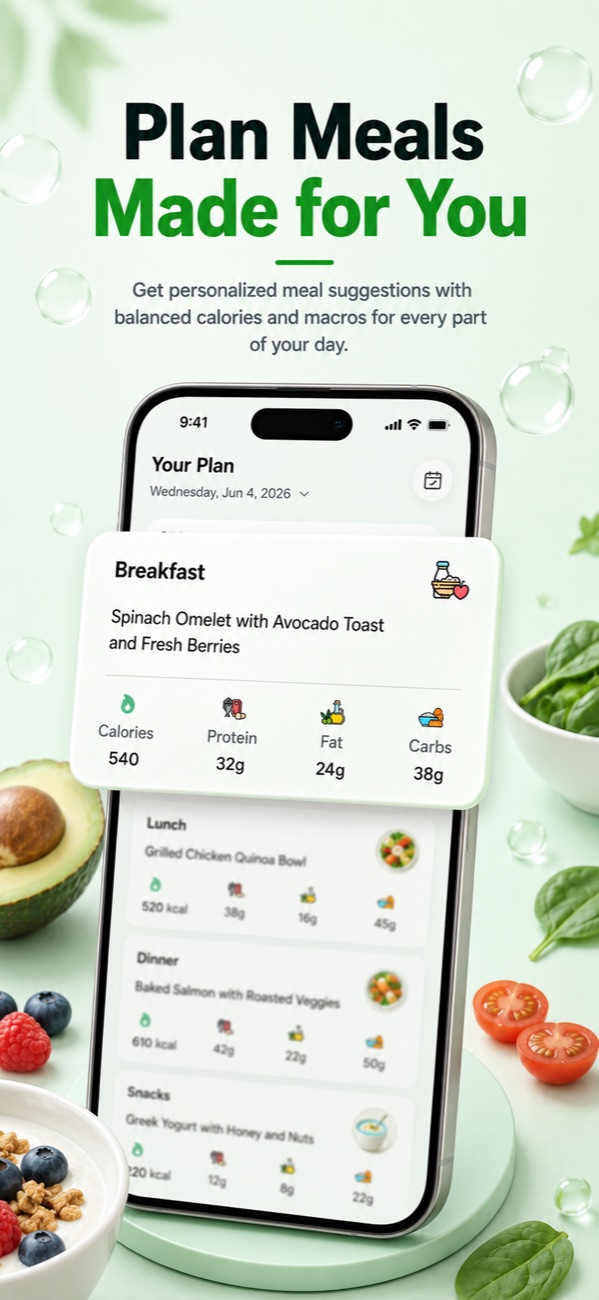
Foodify is free to download on iPhone (iOS 17.6+) with daily limits on AI features; Pro unlocks extended scans, meal plans and the Foodi AI coach, with a 3-day free trial.
How much accuracy do you actually lose without a scale? Less than you think
Here's the part most people miss: even "exact" calorie counting is an estimate. In the US, FDA labeling rules allow nutrition labels a tolerance of roughly 20% on declared calories. Database entries for the same food vary from source to source. Restaurant listings are averages. Your scale-weighed 100 g of chicken breast still carries uncertainty you can't see.
Research on portion-size estimation consistently finds that untrained eyeballing can miss by 30% or more on a single serving, but a structured method — hands, containers or AI — shrinks that considerably. Independent evaluations of photo-based food recognition generally find calorie estimates land within a few tens of percent of measured values, doing best on distinct, visible foods and worst on hidden fats like cooking oil.
More importantly, method-based errors tend to be consistent. If your cupped-hand of rice is always logged 15% low, your weekly total is uniformly shifted — and your weight trend tells you which way to adjust. Eat to your estimated target for two or three weeks, watch the scale trend, and nudge intake up or down. That feedback loop corrects estimation error automatically.
When a food scale IS worth it
A scale earns its counter space in a few specific situations:
- Cutting to low body fat. The leaner you get, the smaller your deficit margin — a 200 kcal daily estimation error can erase it entirely.
- Calorie-dense foods. Oil, butter, nut butter, cheese, granola and nuts pack big calories into small volume errors. A "thumb" of peanut butter that's really two thumbs costs you 100+ kcal.
- Calibration weeks. Weigh your staples for one week, compare against your estimates, and you'll eyeball far better forever after.
The practical middle ground: weigh only the dense stuff, estimate everything else. You get most of the accuracy for a fraction of the effort.
FAQ
How accurate is counting calories with your hands?
Accurate enough for most goals. Each hand unit maps to a rough calorie and macro amount, and because your hand size is constant, your errors are consistent rather than random. Combined with a weekly weight trend to guide adjustments, hand portions can support steady fat loss or muscle gain without a scale.
Do I have to weigh my food to lose weight?
No. Weight loss requires a calorie deficit, not a food scale. Any method that keeps your intake consistently below your expenditure works — hand portions, standardized containers or AI photo estimates. The scale on your bathroom floor, tracked as a weekly trend, tells you whether your estimates need adjusting.
Can AI really estimate calories from a photo?
Yes, within reason. Photo-scanning apps identify the foods on your plate and estimate portions from visual cues. Independent evaluations of this technology generally find estimates land within a few tens of percent of measured values — strongest on visible, distinct foods and weakest on hidden oils. Apps like Foodify let you edit any portion before saving, which closes much of that gap.
Which foods should I still measure?
Calorie-dense ones: cooking oil, butter, nut butters, cheese, nuts and granola. Small volume mistakes on these cost the most calories. Measuring just this handful of foods — even with a tablespoon rather than a scale — removes the biggest source of error in scale-free tracking.
Skip the scale — scan your plate instead
Foodify estimates portions from a single photo and lets you adjust them before saving — free to download on iPhone.

Free to download · AI photo food scanning · iPhone